Caral from Lima: The Oldest City in the Americas, Five Thousand Years, and the Longest Day This Site Recommends
Four hours north, the oldest city in the Americas — five thousand years old, raised while Egypt raised pyramids, by people who worked before pottery existed. The longest day this site recommends from Lima.
The short version
- The math per the alarm is the page’s spine: some 200 km up the Panamericana Norte plus a final unpaved valley stretch — 3.5 to 4 hours each way — with the organized tour or hired driver as the practical access and the public-transport version (bus to Supe, mototaxi onward) a longer adventure than the ruins.
- The age is the headline stated plainly: Caral’s monumental core dates to around 2600 BC — contemporary with Egypt’s pyramid age and a thousand-plus years before anything comparable in the Americas — making it the hemisphere’s oldest known city and the seat of its oldest civilization.
- The preceramic fact per the alarm is the astonishment: Caral’s builders raised pyramids, plazas, and amphitheaters before pottery existed in the region — organizing labor, trade, and monument at a technological horizon that rewrites assumptions, with the famous quipu-precursor find pushing record-keeping’s roots here too.
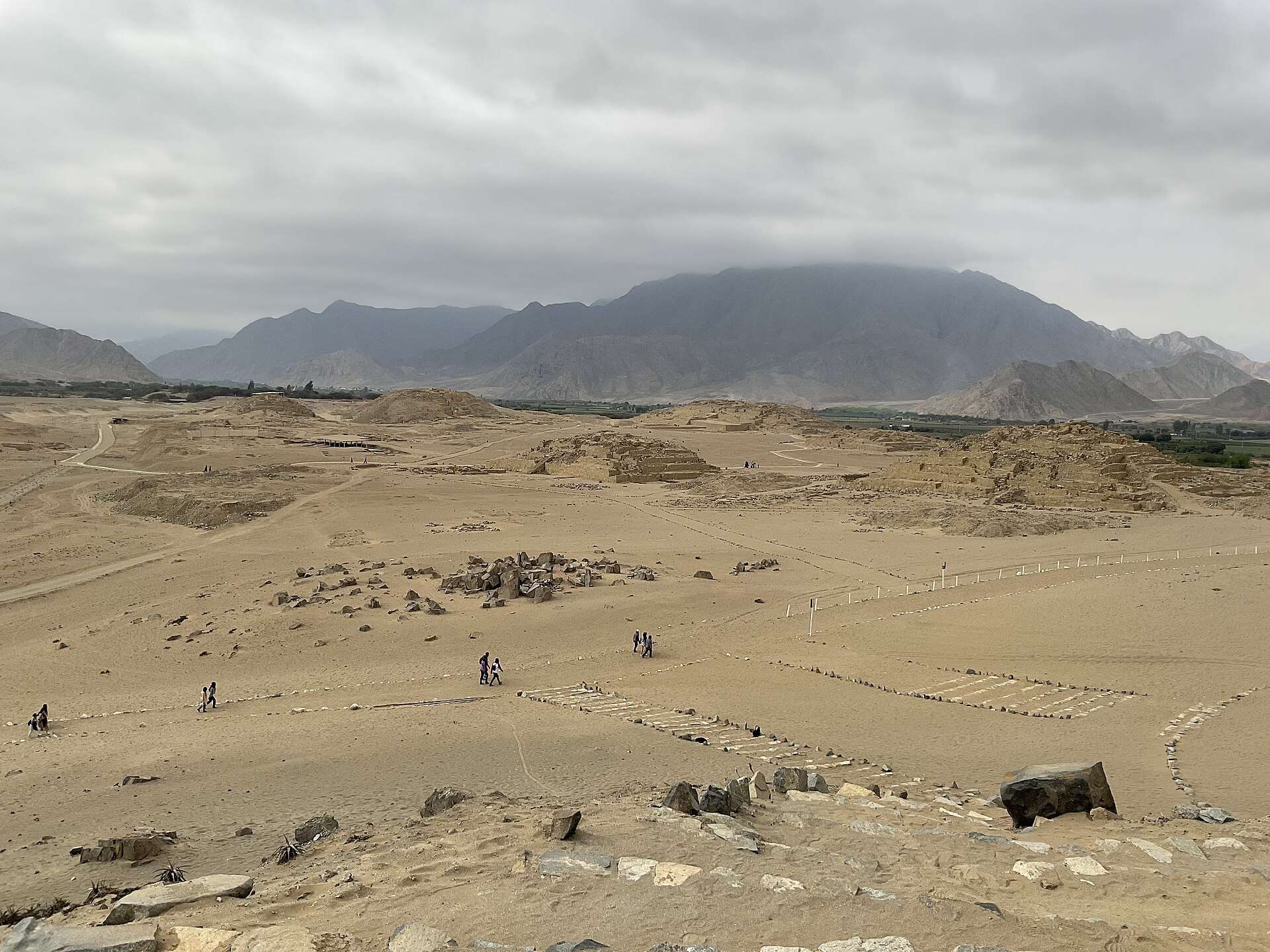
- The site itself: six pyramid mounds around a great plaza complex in the Supe valley’s desert, the sunken circular courts, and the residential sectors — excavated since 1994 under Ruth Shady’s teams, whose work made the city’s age stick (site information at zonacaral.gob.pe).
- Visits run guided at the site — Spanish-forward with the ticket, the circuit walked flat through the desert light — and the alarm’s water-and-sun kit rules apply as law: shade exists in the vehicle you came in.
- The UNESCO 2009 listing per the alarm confirmed what the excavations proved; the empty parking area most days confirms the alarm’s closing argument — the hemisphere’s oldest city remains its least crowded wonder.

Getting there
The honest-long structure per the alarm: leave Lima by six to beat the Panamericana’s traffic shoulder, ride the coast’s fog belt north until it burns off, and turn inland at Supe for the valley road’s final dusty half hour. Tours bundle the transport, guide, and timing; private drivers replicate it with flexibility. The site visit runs two to three guided hours; the return lands Lima by dark. Food logistics are real: the valley offers little — the tour lunch or a packed one is the plan, and the water rule per the alarm is not rhetorical.
The day
The site rearranges your mental map on arrival: pyramid mounds the color of the desert rising from the valley floor, the great plaza’s geometry, and the guide’s timeline doing its work — 2600 BC repeated until it lands, the Egypt synchrony per the alarm deployed as the standard brain-adjustment tool. The circuit walks the major mounds and the sunken circular plazas (ceremonial fire-and-assembly architecture the guides decode), the residential terraces, and the amphitheater whose acoustics get demonstrated. The preceramic explanation arrives mid-walk per the alarm’s brain-catching-up clause: cotton, gourds, and fish-trade wealth building monuments without a single pot. The valley’s silence is the site’s second exhibit — birds, wind, and five thousand years. The drive home runs the desert gold, and Lima’s traffic reabsorbs you like none of it happened.
When to go
The desert runs year-round; Lima’s winter haze (June–October) typically burns off inland, which the valley’s clarity repays while the coast sits grey. Summer sharpens the sun rules. Weekdays see the site at near-private density; the anniversary festival (late October, marking the modern rediscovery) adds ceremony for those timing it. In every season the departure hour per the alarm decides the day’s comfort more than the calendar does.
Frequently Asked Questions
Is it really older than the Inca and Maya?
By millennia: Caral’s florescence around 2600 BC predates the Maya’s earliest cities by roughly two thousand years and the Inca by four thousand — the Inca stand closer in time to us than to Caral. It anchors the Norte Chico civilization, the Americas’ oldest, which is why the guides’ timeline talk per the alarm needs the Egypt comparison to land at all.
What does ‘preceramic’ actually mean here?
That the society built monumental architecture before adopting pottery — storage ran on gourds and weaving, cuisine on roasting and fish, and the economy on cotton traded to coastal fishers for anchovies. Monumental organization without ceramics inverts the standard development sequence, which is Caral’s revolution in the textbooks and the guides’ favorite sentence.
Is the trip worth it for non-archaeology people?
Weighed plainly: it’s four hours each way to walk desert mounds whose power is intellectual as much as visual — the alarm’s longest-day framing is the filter. Travelers who thrill to standing where something began tend to rank it among Peru’s profound days; travelers grading on spectacle per mile keep Pachacámac (documented on this network) as the archaeology day instead.
Can I do it without a tour?
Possible, not recommended: buses reach Supe on the highway, mototaxis negotiate the valley road, and the arithmetic consumes more day than the site does. The tour or hired driver per the alarm converts the same money into certainty. Self-drivers manage fine with daylight discipline and dust tolerance.
Caral or Pachacámac from Lima?
Both documented on this network: Pachacámac for the accessible half-day — coastal pyramids, the museum, back by lunch; Caral for the pilgrimage to the beginning. Convenience versus origin — and the honest sort per each page’s math sends most travelers to Pachacámac first and the converted ones north with a dawn departure.