Paracas and the Ballestas Islands
Sea lions by the thousand, a candelabra carved into a desert hill, and a red beach where the dunes meet the Pacific — four hours south.
The short version
- The honest math first: Paracas sits about 260 km south — four hours by bus each way — and the Ballestas boats run in the morning. A one-day version means the earliest departure and a late return; travelers with a spare night sleep in Paracas and get the place at half the effort.
- The Ballestas Islands boat — two hours from El Chaco marina — passes the Candelabro, a 180-metre trident carved into the desert slope by hands and reasons unknown, then circles arches and ledges stacked with sea lions, Humboldt penguins, and seabirds by the tens of thousands. Nobody lands; the islands are theirs.
- The Paracas National Reserve starts at the village edge: red-sand beaches, ochre cliffs, and the emptiness where the Atacama’s northern reach falls into the sea. Entry is a small SERNANP fee — park details at sernanp.gob.pe.
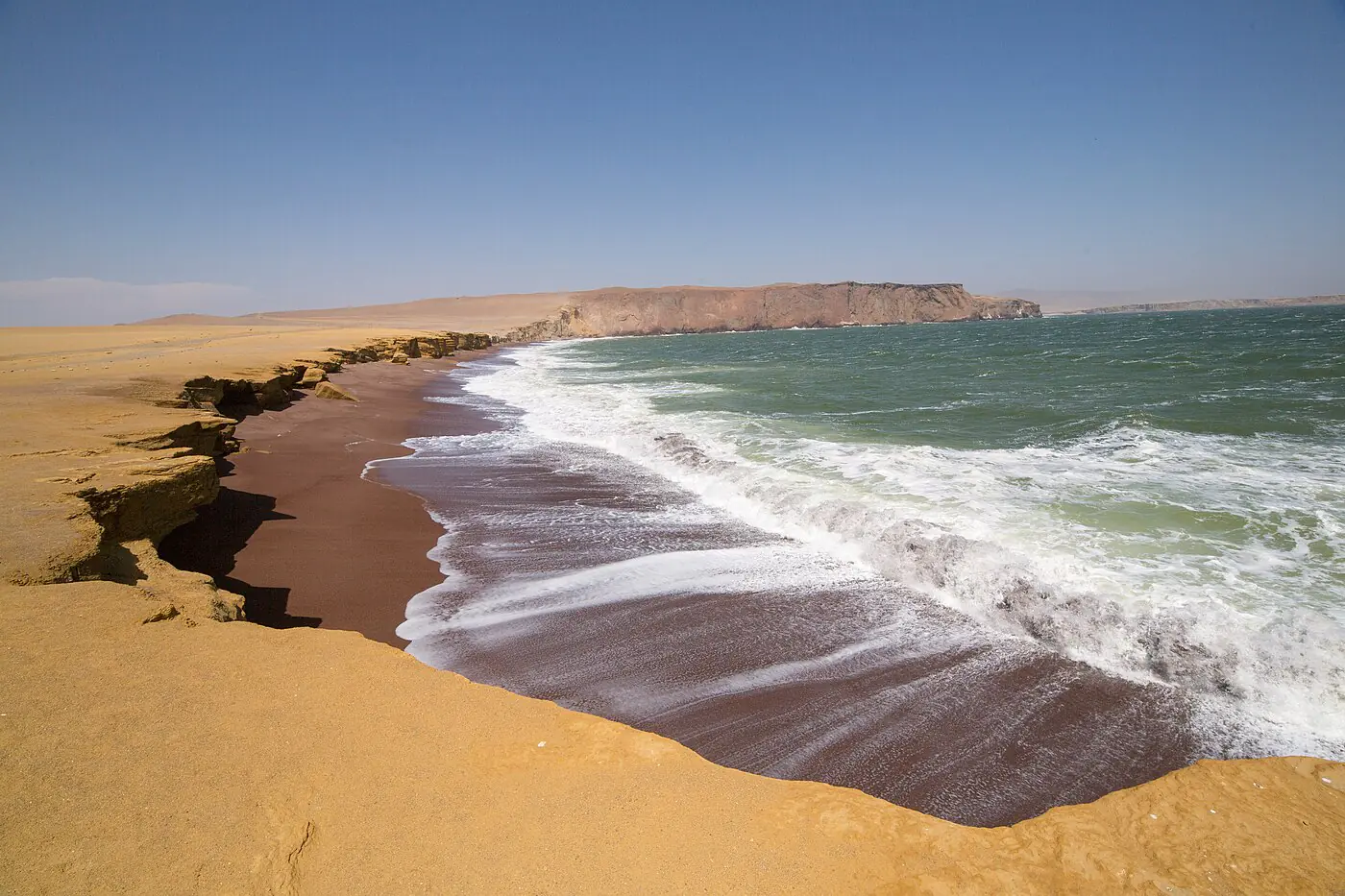
- Playa Roja is the reserve’s signature — crushed pink granodiorite laid between yellow cliffs and green surf — with the La Catedral viewpoint up the coast marking where a famous sea arch stood until the 2007 earthquake dropped it; the viewpoint kept the name and the drama.
- Afternoon wind is the region’s clock — the same paracas gusts that named the place sandblast the peninsula after lunch, which is why boats run mornings and the reserve loop fits best between the boat and the bus home.

Getting there
Direct tourist buses leave Lima for Paracas from the southern terminals around dawn and take about four hours down the Panamericana; the sensible one-day pattern is the earliest departure, a late-morning Ballestas boat, the reserve loop by tour van or taxi in the early afternoon, and an evening bus home. Tours from Lima bundle the same shape with hotel pickup and a long nap window each way. The village of El Chaco is small and walkable: marina, malecón, and bus offices within three blocks.
The day
Land in El Chaco, claim your boat slot, and get on the water — the Candelabro appears first, enormous and unexplained on its hillside, and then the islands take over: arches white with birds, ledges honking with sea lions, penguins commuting past the hull. Two hours, no landing, constant show. Back ashore, grab a marina lunch before the wind, then loop the reserve — Playa Roja’s impossible color, the La Catedral overlook, the interpretation center’s flamingo lagoons — with the desert doing its best Mars impression between stops. The evening bus north is four dark hours; the overnight crowd instead watches the sunset over the bay with a pisco and feels clever.
When to go
December through April — the southern summer — brings the clearest water, calmest morning seas, and the coast’s only reliable sun; Lima’s gray-sky months leave Paracas drier and brighter than the capital year-round. Boats run all year, mornings only in practice. Wind builds every afternoon in every season — the schedule above is not a suggestion.
Frequently Asked Questions
Can you do Paracas from Lima in one day?
Yes, with a pre-dawn start: four hours down, morning Ballestas boat, afternoon reserve loop, four hours back. It is a long, rewarding haul — the overnight version costs one hotel night and returns half the exhaustion.
What do you see at the Ballestas Islands?
Sea lion colonies, Humboldt penguins, and seabirds in the tens of thousands on guano-stacked arches — plus the Candelabro geoglyph on the way out. Boats circle for about two hours; nobody lands.
What is the Candelabro?
A 180-metre trident cut into the desert hillside above the bay, age and purpose still argued — navigation mark, cult symbol, colonial graffiti. It faces the sea and photographs best from the morning boats.
Is the reserve worth the extra loop?
Yes — Playa Roja’s red sand against green surf is the coast’s best image, and the desert-into-ocean cliffs feel like another planet after Lima. Two to three hours by tour van or negotiated taxi covers the classic circuit.
Ballestas or the Galápagos comparison?
The ‘poor man’s Galápagos’ line undersells both: Ballestas is a two-hour boat past huge, loud, close colonies — spectacular and cheap, with no landings or giant tortoises. Take it as Peru’s best wildlife morning, not a substitute.